B2B websites saw a 17% MoM increase in the number of advertisers running ads on their sites in May. This is a hopeful number considering that roughly 8% fewer companies were placing digital ads on B2B websites initially. As the economy reopens, it seems that advertisers are beginning to stabilize.
Shopping category downloads in Latin America grew 43% year-over-year for the month of May, mostly on the shoulders of Brazil and Mexico, who are the leaders in both absolute numbers and YoY percentage gain.
Liquidity Indicators Beginning to Show a Wider Gap Between Buyer And Seller Expectations. CoStar recently released its monthly Commercial Repeat Sale Indices (CCRSI), providing the market's first look at commercial real estate pricing trends through April 2020.
If Uber and Grubhub come to an agreement on Uber’s bid to purchase Grubhub, they will ask regulators to approve the transaction that would combine two of the country’s largest food-delivery operators. Here, we examine the likely drivers behind the deal: gaining market share, and mitigating market factors that have made turning a profit in the highly competitive food delivery business extremely difficult.
Constantly shifting quarantining rules, mandatory mask wearing on airplanes and social distancing have left many asking whether the European summer vacation ritual will take a breather this year. With airlines such as American announcing increasing demand and air prices severely depressed it looks like summer is still on the calendar, although it’s going to be anything but normal.
In March 2020, 3.6% of home mortgages were in some stage of delinquency, down from 4% a year earlier and the lowest for the month of March in more than 21 years, according to the latest CoreLogic Loan Performance Insights Report. The measure, also known as the overall delinquency rate, includes all home loans 30 days or more past due, including those in foreclosure.
In June, 30 percent of Americans missed their housing payments, down slightly from 31 percent in May but still up from 24 percent in April. Missed payments continue to concentrate among renters, younger and poorer Americans, and those who cannot work remotely.
In this Placer Bytes we dive into the rebounds of Five Below and Macy’s and try to reinforce the bull case for the office supplies sector. Five Below is a brand that was hit hard by the pandemic. Visits surged in February, growing by 16.8% year over year, before taking a 45.9% drop in March and falling completely flat in April. Yet, the rebound is underway.
Iran contributed to additional weekly lost production of 93 kb/d, where the outages at the Ardeehir oilfield took additional production offline this week. Outages are ongoing at the Karanj oilfield.
Tension between the United States and China has ratcheted up in recent weeks amid increasingly hostile rhetoric. The global spread of the coronavirus has further hurt relations between Beijing and Washington, stoking the possibility of a new trade war amid a global economic slowdown. However, from a flows perspective, all seems to be fine.
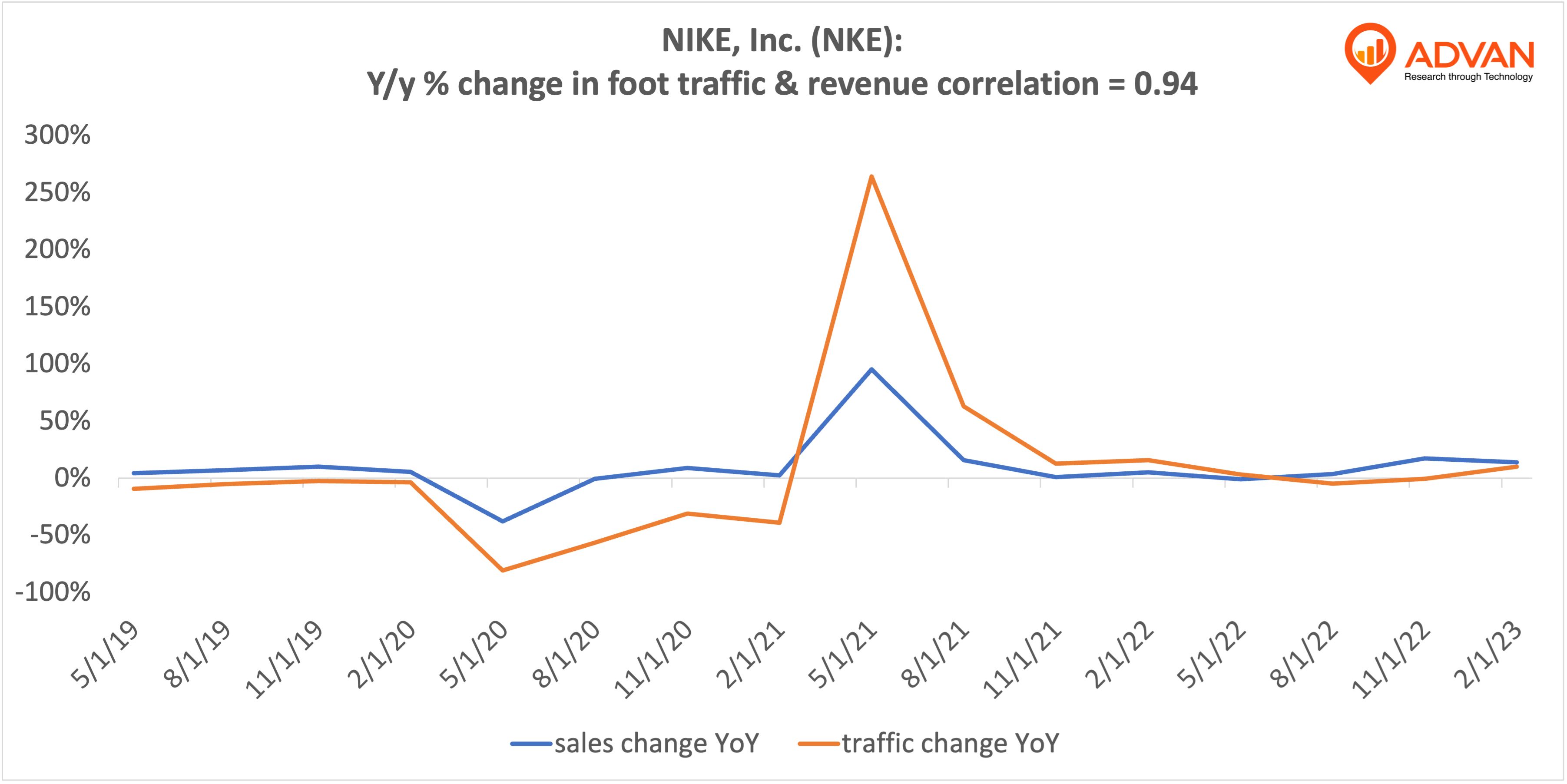
Monday was the first day non-essential office workers could return to work in Boston. There was NO rush back to the office. Using mobile tracking data from Advan Research, overall foot traffic was up 7.3% in the Seaport waterfront last week compared to 2 weeks ago.
Earnest continues to monitor consumer behavior as state economies reopen across the country. In this refresh, we look at state performance in the context of stay-at-home orders expiring, foot traffic divergences across categories, a Texas drill-down, and how spending by channel is behaving in a staggered reopened economy.
After being completely shut down for months, restaurants are quickly recovering. According to reservation data from OpenTable as of June 3rd, seated dining volume in states such as Rhode Island have already reached 90% of last year’s daily levels. On average it is taking states 16 days to reach 25% of last year’s daily reservation levels.
Based on the preliminary data, 44% of CIOs indicated their organization is decreasing investments in emerging tech due to COVID-19.
Italy has seen a marginal increase in international visitors since opening its borders on Wednesday last week (3 June), with data suggesting that the country’s tourism sector will have to wait to see the spike it is hoping for to reboot the crucial summer season.
A Nielsen investigation has identified six key consumer behavior threshold levels that tie directly to concerns around the novel coronavirus (COVID-19) outbreak. The thresholds offer early signals of spending patterns, particularly for emergency pantry items and health supplies, and we are seeing these patterns being mirrored across multiple markets.
As we’ve transitioned to a new normal, what we’re interested in buying has changed.
The latest insights from Comscore (Nasdaq: SCOR), a trusted partner for planning, transacting and evaluating media across platforms, show an increase in consumer interest across several travel categories, signaling the industry may be showing signs of recovery.
This is the 11th edition of a weekly review of changes in road traffic demand in the United States from the COVID-19 virus spread and our collective response. We will endeavor to publish this Synopsis every Monday for the foreseeable future, providing results through Friday of the previous week.
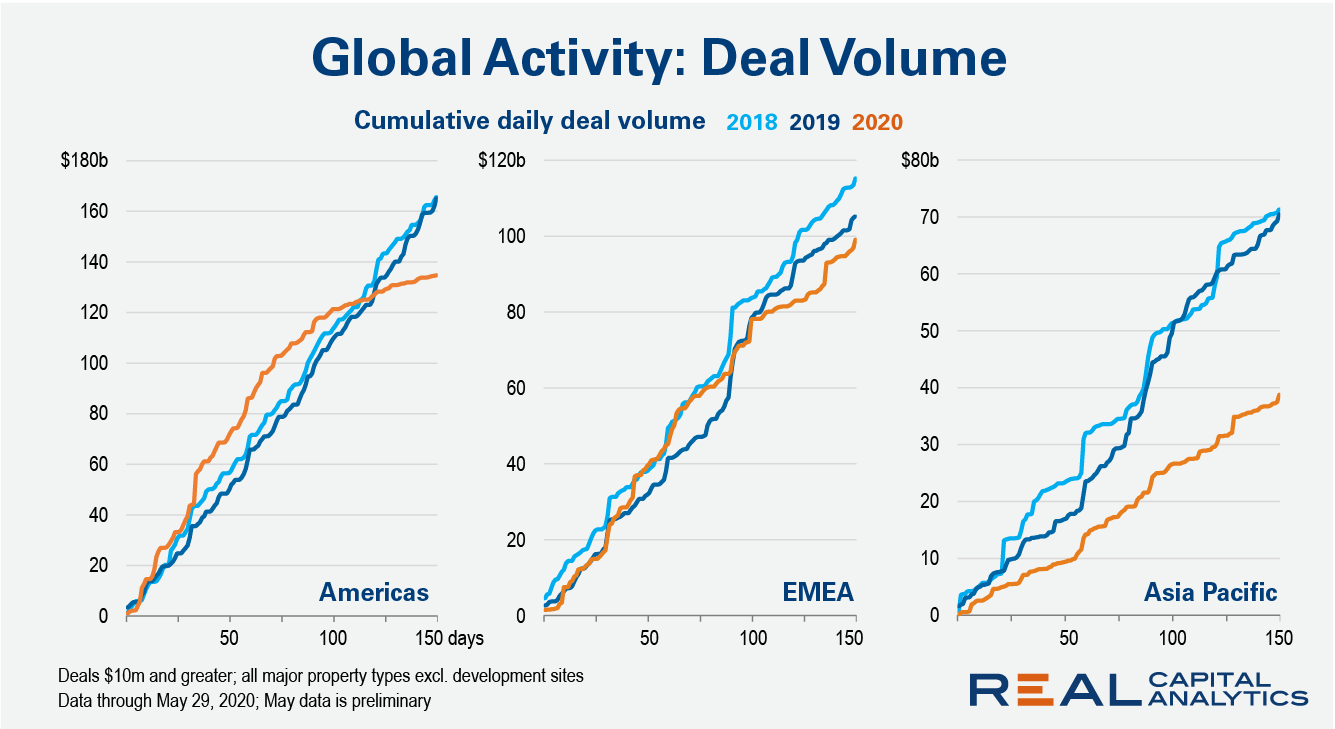
Commercial real estate transaction volume in Europe is resisting the slide seen across the Americas and Asia Pacific in the first 150 days of 2020 due to a string of multibillion-euro deals. The latest Real Capital Analytics data reading indicates that transaction volume for Europe, Middle East and Africa (EMEA) is just 6% lower than 2019 levels, while in the Americas volume is 18% down and in Asia Pacific activity is 45% lower.